Stage 7: Agent-Mediated Scientific Workflows
Agents that build workflows, not just execute them.
Task
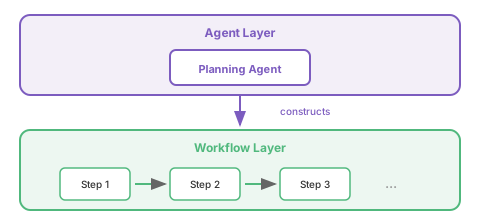
Allow agents to dynamically construct, adapt, and execute scientific workflows—bridging agentic AI with existing workflow systems.
Why This Matters
Traditional workflows are static. Agent-mediated workflows adapt to results, handle exceptions intelligently, and integrate naturally with DOE’s existing workflow infrastructure (Parsl, Globus Flows, etc.).
Details
| Aspect | Value |
|---|---|
| CAF Components | Workflow integration layer |
| Where it runs | DOE infrastructure |
| Scale | Varies by workflow |
| Status | Early |
Architecture
Code
| Example | Description |
|---|---|
| AgentsWorkflow | Dynamic workflow construction with adaptive execution |
Prerequisites
Before building workflow agents:
- AgentsLangGraph — StateGraph patterns for multi-step workflows
- AgentsCheckpoint — Checkpoint/resume for long-running workflows
Integration with Existing Systems
Agent-mediated workflows complement (not replace) existing tools:
| System | How Agents Help |
|---|---|
| Parsl | Agents decide what to run; Parsl handles HPC execution |
| Globus Flows | Agents construct flows dynamically; Globus executes reliably |
| Prefect/Airflow | Agents adapt workflows at runtime; orchestrators manage scheduling |
Related Topics
- Long-Lived Agents — Workflows that span days or weeks
- Governed Tool Use — Policy enforcement for workflow steps
- Federated Agents — Cross-institutional workflow execution