
AI Agents for Scientific Discovery
Agentic discovery combines reasoning-capable AI with scientific and engineering resources—such as literature collections, simulation codes, experimental platforms, and knowledge bases—to accelerate the pace of discovery. Recent advances in large language models (LLMs) and related technologies make it possible to build agentic systems that automate key aspects of scientific work: synthesizing information from the literature, generating and prioritizing hypotheses, designing and executing protocols, running simulations or experiments, and interpreting results.
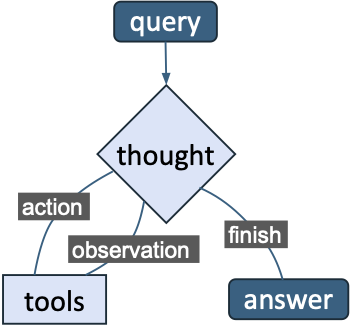
An agent is a persistent, stateful process that acts on behalf of a user or system. An agent may:
- Observe inputs or events
- Plan (decide on) actions using a policy (rules or LLM)
- Act: Execute tools or interact with other agents
- Learn: Update state to adapt over time
We can think of an agent as a scientific assistant that can reason, act, and coordinate on our behalf.
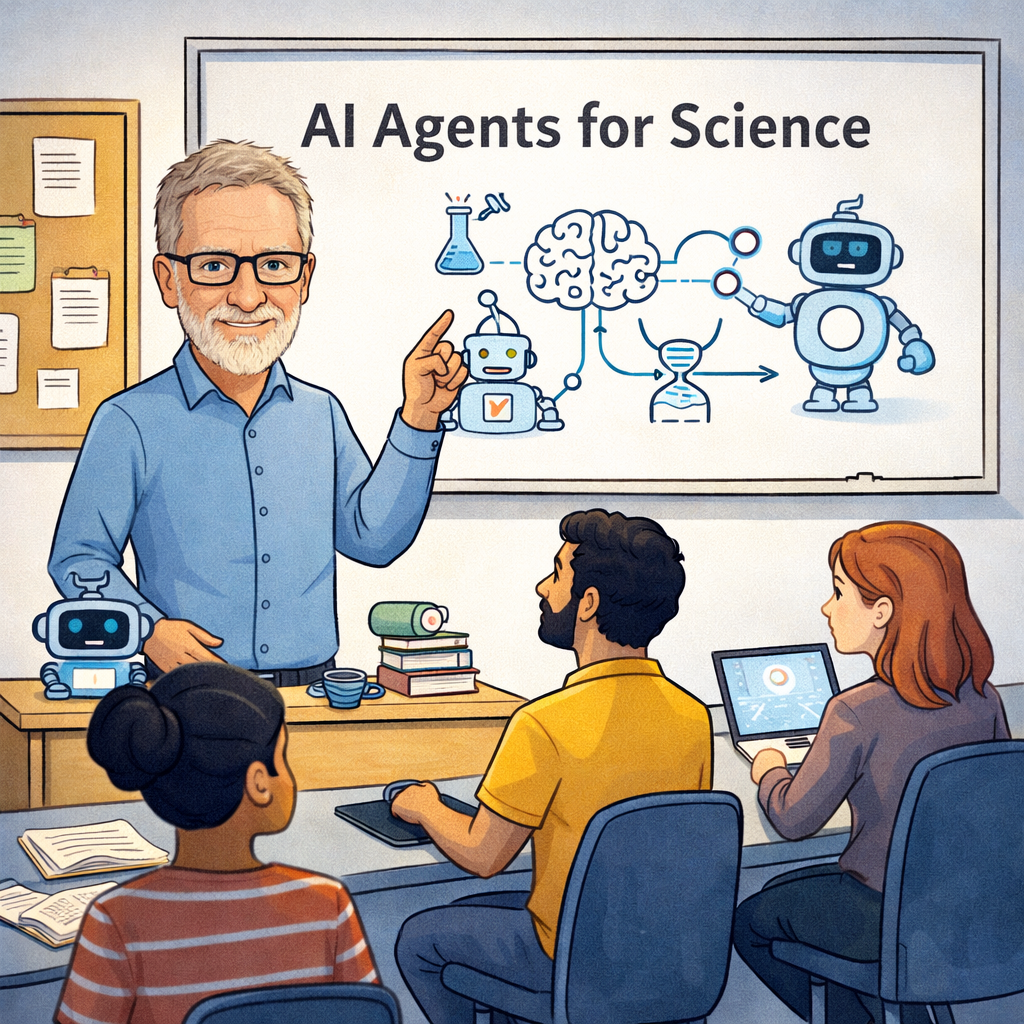
Teaching
AI Agents for Science curriculum
(University of Chicago, Autumn 2025).
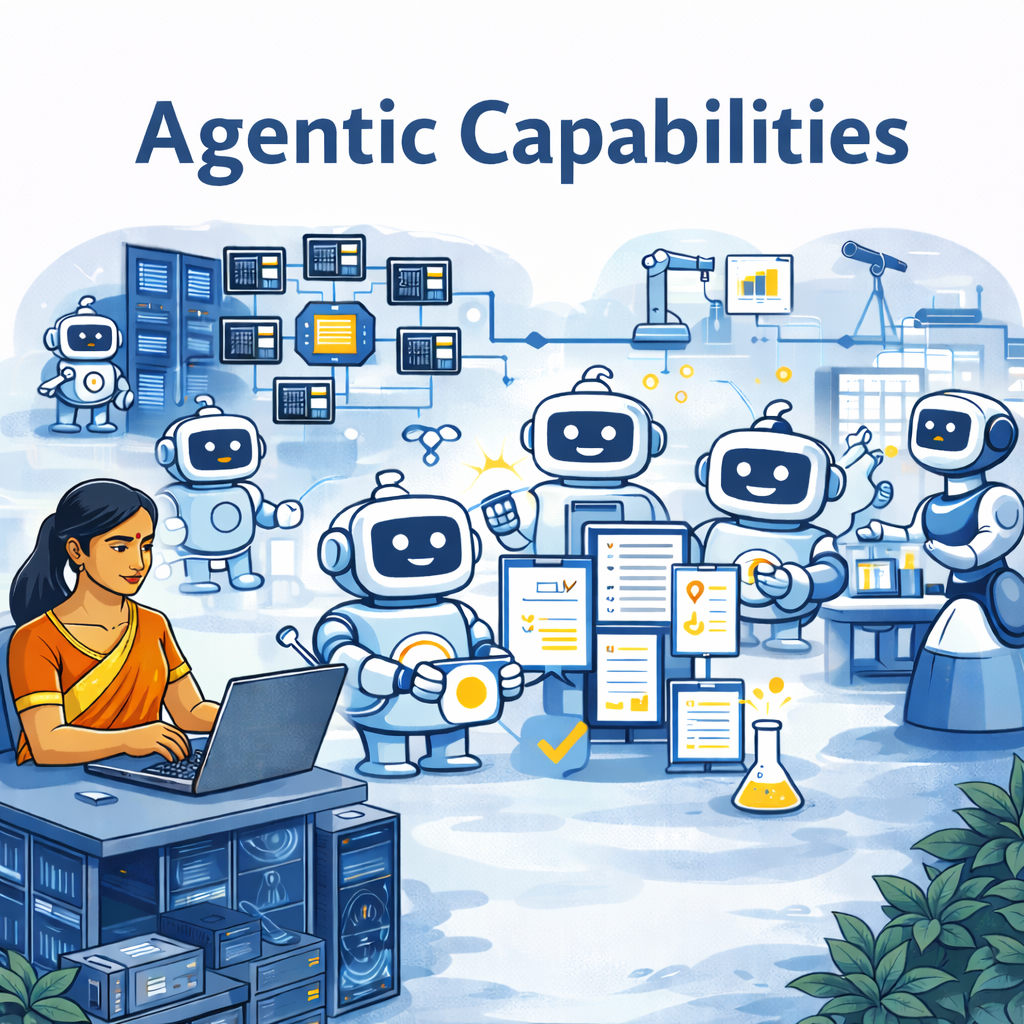
Capabilities
Deployment patterns from local prototypes to massively parallel HPC inference.
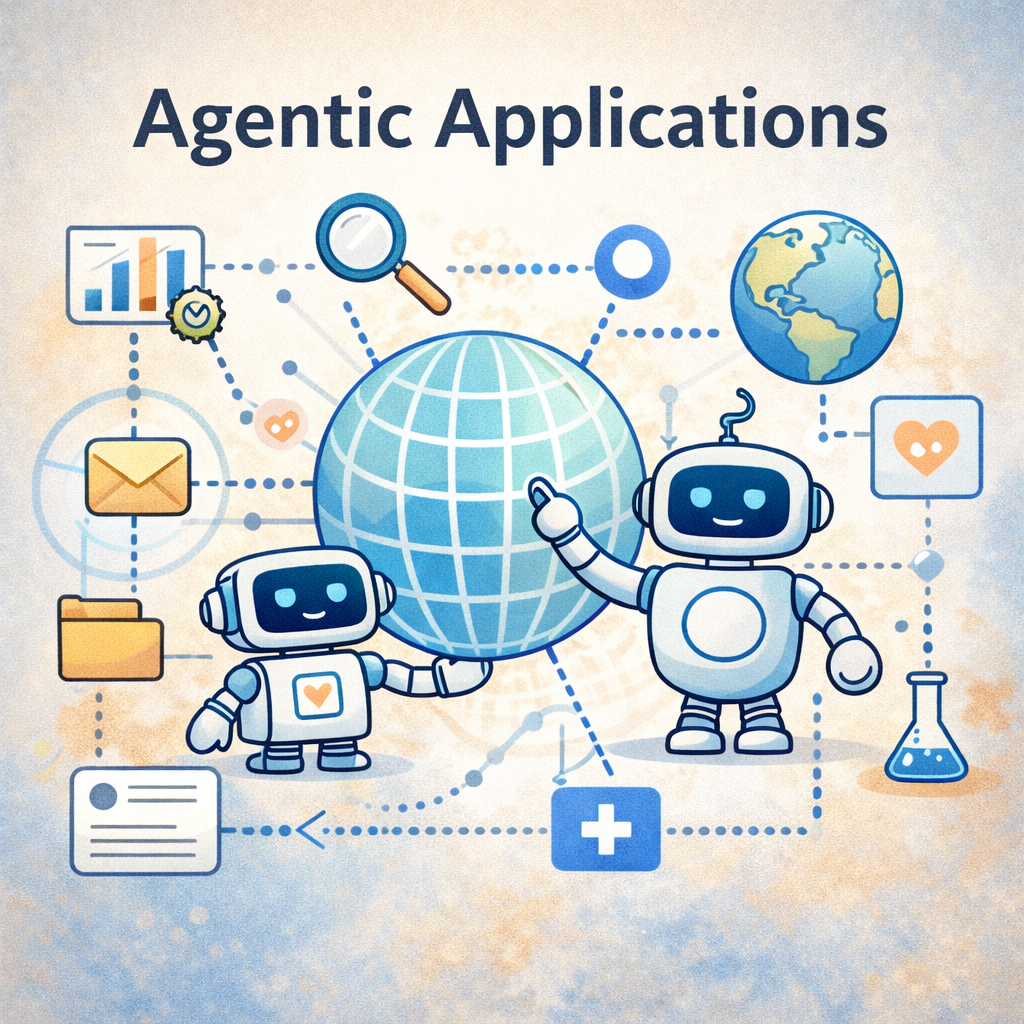
Applications
Example applications of agentic systems for scientific discovery.
Resource Rights
Scalable authorization architecture for autonomous scientific agents.
What’s New
Now enrolling: AI Agents for Science, Winter 2027 (CMSC 35370, MW 3:00–4:20pm).
- Resource Rights Architecture — scalable authorization for autonomous agents (Jul 7, 2026)
- Greatly expanded set of Capability examples (Feb 4, 2026)
- First Agent of the Week: OPAL — Plant Phenotyping Analysis Agent (Jan 29, 2026)
- Slides from a talk at Trillion Parameter Consortium meeting on systems requirements for scalable agentic AI (Jan 28, 2026)
- Slides from a talk at U. Würzberg (thanks to host S. Kounev) covering agents for scientific discovery, Academy agent framework, and agency as new organizing abstraction for CS (Jan 22, 2026)
- Pointer to Agent of the Week program (Jan 16, 2026)