Stage 5: Multi-Agent Coordination
Many agents under shared governance—within one institution or across many.
Task
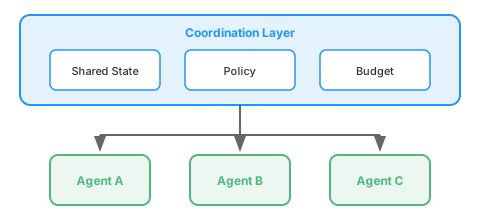
Execute hundreds or thousands of agents simultaneously with shared budgets, quotas, and policies. Enable agents owned by different institutions to cooperate under shared protocols.
Why This Matters
Large-scale discovery requires specialized agents working together. Coordination prevents conflicts, ensures fair resource allocation, and enables cross-institutional collaboration—a core DOE differentiator.
Details
| Aspect | Value |
|---|---|
| CAF Components | Shared state, policy engine, budget ledger |
| Where it runs | Distributed (single institution or federated) |
| Scale | O(10²–10³) concurrent agents |
| Status | Emerging |
Architecture
Code
| Example | Description |
|---|---|
| AgentsCoordination | Shared budget, state, and policy across agents |
| AgentsLangGraph | 5-agent pipeline with LangGraph orchestration |
| AgentsAcademy | 5-agent pipeline with Academy messaging |
Prerequisites
Before diving into multi-agent coordination:
- AgentsLangGraph — Multi-agent pipelines with LangGraph
- AgentsAcademy — Agent-to-agent messaging with Academy
- Governed Tool Use — Policy enforcement patterns
Next Steps
After mastering coordination:
- Long-Lived Agents — Agents that persist across sessions
- Agent Workflows — Dynamic workflow construction
Related Topics
- Federated Agents — Coordination across institutions
- Scale Inference — Parallel agent execution at scale